



Read Blog Post
User-Generated Content as a Growth Engine: How to Get Your Audience to Create for You in 2026

23.08.2026
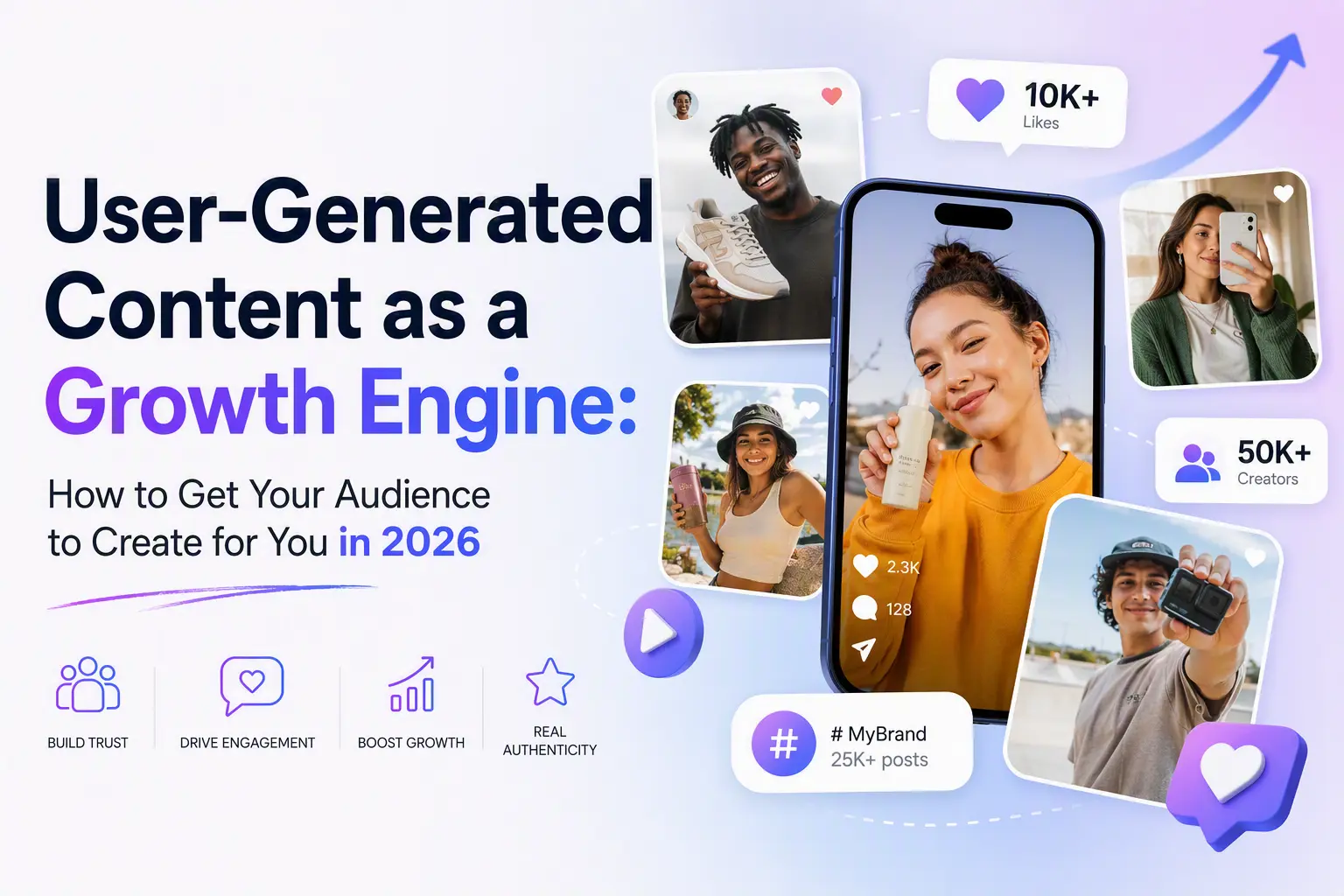
Here's something that still surprises me: most brands spend 80% of their content budget on producing their own photos, videos, and copy – while completely ignoring the goldmine sitting right in front of them. I'm talking about user‑generated content (UGC). The stuff your customers, followers, and fans are already creating about your brand, often without you even asking.
In 2026, UGC isn't a nice‑to‑have. It's a competitive advantage. Why? Because people trust other people more than they trust brands. A study from Nielsen found that 92% of consumers trust organic, user‑generated content more than traditional advertising. And platforms like Instagram and TikTok actively reward UGC in their algorithms – they see it as authentic, engaging, and community‑driven.
So how do you get your audience to create content for you? And once they do, how do you turn it into a sustainable growth engine? Let me walk you through what actually works in 2026.
Why UGC Beats Brand Content Every Time
Let's be honest: your branded photos are polished, professional, and probably a little bit predictable. Your customers' photos? They're messy, real, and infinitely more relatable. That's the power of UGC – it feels like a recommendation from a friend, not a sales pitch.
Three reasons UGC outperforms brand content:
- Trust: People trust peers over brands. A customer's photo of your product in their daily life carries more weight than your best studio shot.
- Cost: UGC is essentially free content. You're not paying photographers, models, or editors – your audience does the work for you.
- Reach: When someone posts about your brand, their followers see it. That's organic reach you can't buy.
In fact, brands that actively incorporate UGC into their strategy see up to 4x higher engagement rates on those posts compared to branded content. I've seen this firsthand: a client of mine started reposting customer photos and their engagement jumped by 60% within a month.
5 Proven Ways to Encourage UGC (That Actually Work in 2026)
You can't just sit back and hope people will post about you. You need to give them a reason, a structure, and a little bit of incentive. Here are five tactics that deliver consistent results.
1. Run Contests and Giveaways With a UGC Twist
The classic "like and follow to win" contest is dead. In 2026, the most effective contests require participants to create something – a photo, a video, a story – and use your branded hashtag. The prize doesn't have to be huge; it just has to be relevant to your audience.
Example: A coffee shop ran a "Best Morning Brew Photo" contest. The winner got a month of free coffee. They received over 500 entries, each one a piece of free, high‑quality content. And every entry was shared by the participant to their own followers – that's organic reach you can't buy.
Pro tip: make the entry requirements simple. One photo, one hashtag, one tag of your account. The easier it is, the more entries you'll get.
2. Create a Branded Hashtag and Promote It Everywhere
A branded hashtag is the backbone of any UGC strategy. It collects all user posts in one place, making it easy for you to find and repost them. But here's the key: you need to promote it consistently – in your bio, on your posts, in your email newsletters, and even on your packaging.
Examples that work: #ShareACoke (Coca‑Cola), #MyStarbucks (Starbucks), or for a smaller brand, #YourBrandNameStories. The more specific, the better. #MyDailyAdventure for an outdoor gear brand is stronger than #Adventure.
What I've learned: don't just create the hashtag and forget about it. Mention it in your Stories, add a sticker that says "Use our hashtag," and repost user content regularly to show that you're paying attention. When people see their content featured, they're more likely to post again.
3. Launch a Challenge (Especially on TikTok and Reels)
Challenges are the UGC engine of short‑form video platforms. A simple, repeatable action – a dance, a transition, a "day in the life" format – can generate thousands of pieces of content if you launch it right.
How to do it:
- Create a sample video showing exactly what you want people to do.
- Use a clear, catchy name for the challenge.
- Add a trending sound (or create your own).
- Kickstart it by tagging a few influencers or loyal customers to participate first.
Even a small challenge can generate 50‑100 UGC pieces in a week. And each one is a new touchpoint for your brand. I've seen brands grow their follower count by 20% in a single month just from a well‑executed challenge.
4. Feature Customer Testimonials and Reviews as Visuals
This is the easiest UGC tactic: turn positive reviews and testimonials into visual content. Screenshot a glowing review and turn it into a carousel post. Record a short video of a customer explaining how your product solved their problem. These are low‑effort but high‑impact because they're pure social proof.
Pro tip: always ask permission before reposting a review or testimonial. A simple "Can we share this on our page?" goes a long way in building trust. Most customers will say yes – they're happy to be featured.
5. Offer Incentives Beyond Contests (Discounts, Shoutouts, Early Access)
Not everyone wants to enter a contest. Some just need a small nudge. Consider offering a discount code to anyone who posts a photo with your product and tags your account. Or give a shoutout in your Stories to the best UGC of the week. Early access to new products for active contributors is another powerful motivator.
Example: a skincare brand offered 20% off to anyone who posted a "shelfie" (a photo of their skincare routine) with the brand's products. They saw a 300% increase in UGC posts within two weeks.
How to Curate and Showcase UGC Without Looking Lazy
Reposting user content is great, but you can't just repost everything and call it a day. You need to curate with intention. Here's my rule of thumb: only repost content that aligns with your brand aesthetic and values.
What to look for in UGC:
- High‑quality visuals (good lighting, clear composition).
- Positive sentiment (avoid anything that might be controversial).
- Relevance to your product or niche.
- Diversity of voices (show different types of customers).
When you repost, always credit the original creator – tag them in the post and in the caption. This builds goodwill and encourages more UGC. And don't just repost; add your own commentary. A simple "We love how @user styled this!" adds a human touch.
The Legal Side: What You Need to Know About Rights and Permissions
This is the part most brands ignore – and it can come back to bite you. When you repost someone's content, you're using their intellectual property. Even if they tagged you, you don't automatically have the right to repost.
Best practices for UGC rights:
- Ask explicitly: send a DM or comment asking for permission. Most people will say yes.
- Use a UGC terms agreement: include a clause in your contest rules or website terms that says by using your hashtag, users grant you permission to repost.
- Always credit: even with permission, always tag and mention the original creator.
- Remove if asked: if someone requests you take down their content, do it immediately – it's not worth the hassle.
I've seen brands get into legal trouble over reposting without permission. Don't let that be you. A simple "May we share this?" takes 10 seconds and saves you headaches.
UGC as a Social Proof Tool – and Why It Converts Better Than Ads
Let me share a number that blew my mind: UGC‑based ads have a 20% higher click‑through rate and 40% higher conversion rate than brand‑created ads, according to a recent study. Why? Because UGC feels like a recommendation, not a promotion.
When you use UGC in your ads – whether it's a Facebook carousel of customer photos or a TikTok that reposts a user's video – you're leveraging social proof at scale. It tells potential customers: "Real people like you love this product. You will too."
Practical tip: create a "UGC library" – a folder or database where you store the best user content you've collected. Then use it in your email campaigns, landing pages, and paid ads. It's a free content asset that keeps delivering value.
When Paid Signals Can Amplify UGC Campaigns
Even the best UGC campaign needs a little push sometimes. That's where paid social signals – likes, views, comments – come in. They can give your UGC posts the initial visibility they need to trigger the social proof effect I mentioned earlier.
For example, you've just launched a new challenge and posted a sample video. It gets a handful of organic views, but it's not taking off. A small boost of Instagram Reels views or TikTok likes can help it show up on the "For You" page, where it can gain organic traction.
But remember: paid signals amplify UGC – they don't replace it. If your challenge is confusing or your hashtag is too long, no amount of paid views will save it. Focus on creating a simple, compelling UGC prompt first. Then use paid signals to give it a little extra reach.
Related Reading from Our Blog
These articles will help you build a complete growth strategy that combines UGC with other proven tactics:
- Psychology of Engagement: Create Posts People Comment, Save & Share – understand the emotional triggers that drive UGC participation.
- How the Instagram Algorithm Works in 2026 – learn why UGC is favored by the algorithm.
- Safe Strategies to Buy Followers – how to combine organic UGC with safe paid growth.
- TikTok Growth Hacks 2026 – short‑form strategies that work perfectly with UGC challenges.
- Instagram Reels Views Panel vs Organic 2026 Guide – decide when to boost UGC videos with paid views.
Frequently Asked Questions (FAQ)
Here are the most common questions we hear about user‑generated content – with practical answers.
1. What's the easiest way to start collecting UGC if I have a small audience?
Start with a simple review request. After a purchase, send an email asking customers to share a photo of them using your product with a specific hashtag. Even 5‑10 UGC pieces are enough to begin building a library.
2. Do I need to pay people for their UGC?
Not usually. Most customers are happy to be featured. However, for larger campaigns or if you're using UGC in paid ads, it's good practice to offer a small gift (discount, free product) or even a small fee for the rights.
3. Can I use UGC from Instagram on my website or in ads?
Only with explicit permission. Instagram's terms allow reposting within the platform, but using it in ads or on your website requires the creator's consent. Always ask and, if possible, get a written agreement.
4. How do I find UGC that's already been posted about my brand?
Monitor your tagged posts and branded hashtag. You can also use social listening tools like Brand24 or Mention to track mentions even when people don't tag you directly. Search for your brand name and product keywords regularly.
5. How often should I repost UGC?
Aim for 20‑30% of your total posts to be UGC. That strikes a balance between showing off your community and maintaining your own branded content. You can also share UGC in Stories daily – it's a low‑commitment way to keep the feed fresh.
6. What if I get negative UGC – someone posts a complaint or bad review?
Respond quickly and professionally. Acknowledge their issue, offer a solution, and take the conversation to DMs if needed. Never delete negative posts unless they violate community guidelines. Handling criticism well actually builds trust.
7. Can UGC really replace a content team?
Not entirely – you still need original content for product launches, announcements, and brand storytelling. But UGC can significantly reduce your content production load, especially for social media day‑to‑day posts. Many brands now run a 50/50 split: half branded, half UGC.
Start Using the SMM Services Now!
Cheapest Followers, Likes, Views, Reactions for Social Media
Sign Up Now